How to prioritize spaces during an office painting project
Start by identifying the most visible or operationally sensitive office areas first.
That makes it easier to phase the work and reduce disruption where the business feels it most.
Some offices care most about reception, conference rooms, or shared spaces. Others need to protect quiet work zones or the areas where staff movement is heaviest.
This is one of the first steps in office painting project planning because not every room needs to be handled the same way or on the same day.
How to coordinate office painting around real work schedules
The more clearly the contractor understands team movement, schedules, and room priority, the easier it is to keep the project manageable.
Office painting goes better when planning is built around actual use instead of generic assumptions.
That often means discussing high-traffic times, employee access, shared equipment, and which areas need to stay available as long as possible.
For some offices, that may mean after-hours work or phased daytime work. For others, it means sequencing the project so core work areas stay usable.
Why phasing usually matters in office painting
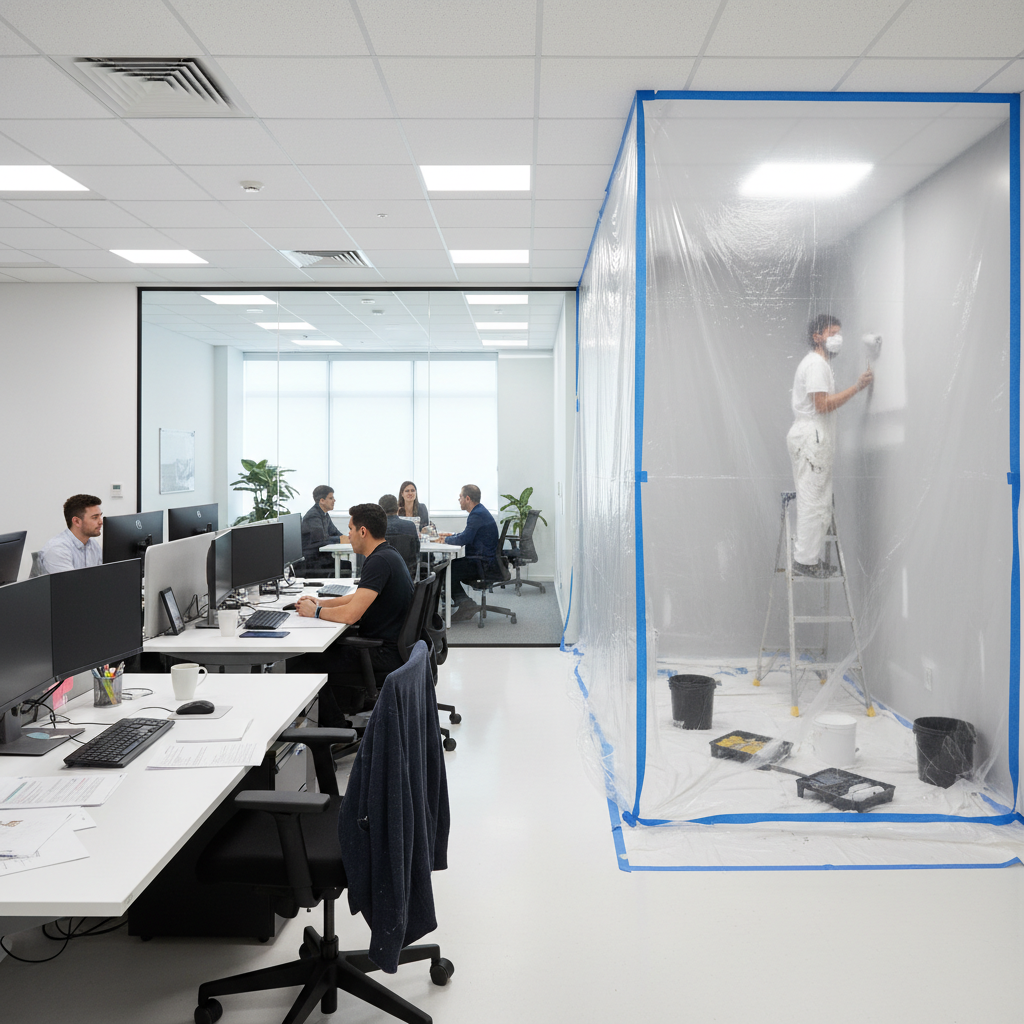
Phasing helps the project move without affecting the entire office at once. It creates a clearer rhythm for both the business and the crew, and it gives managers a simpler way to explain the plan internally.
That is often one of the easiest ways to reduce frustration during the project.
When an office painting project is phased well, employees usually know what to expect and managers have more control over how disruption is handled.
What to clarify before office painting starts
It helps to define which spaces matter most, what hours the office is busiest, whether any work should happen after hours, and what level of reset is expected each day.
It is also worth confirming who communicates schedule updates, what protection is included, and how furniture or equipment will be handled in active work areas.
Those details make it easier to keep the workspace feeling under control while the project is active.