How to plan commercial painting around business operations
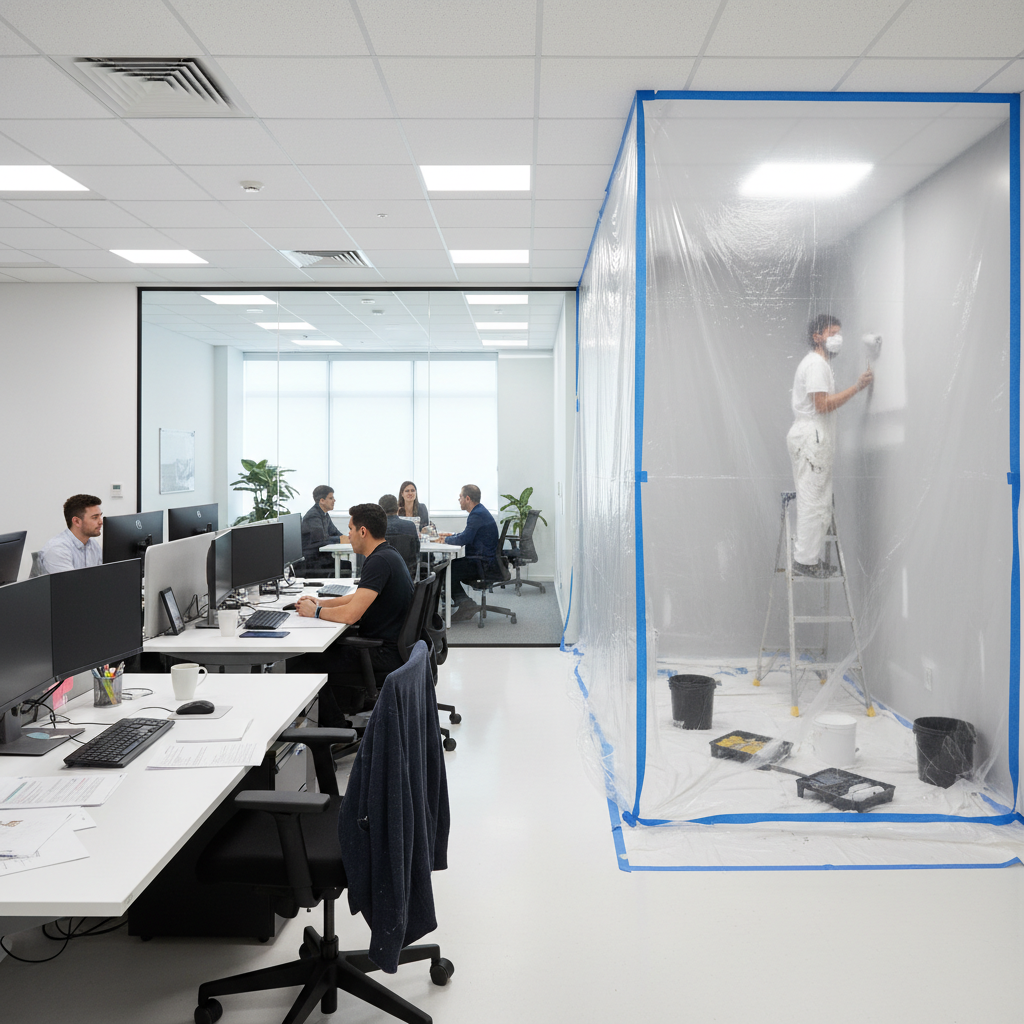
The clearest way to reduce disruption is to plan the work around how the space actually operates each day.
That can mean phasing by area, adjusting timing, or identifying zones that need to stay active.
The best commercial painting plans start by understanding where people move, which areas matter most, and what cannot be interrupted without affecting the business.
When a contractor understands the real workflow of the space, it becomes much easier to reduce downtime instead of treating the project like a generic repaint.
Why communication reduces downtime during commercial painting
Businesses need a clear scope, timing expectations, and a realistic understanding of what the crew needs from the site.
Better communication reduces surprises and makes the work feel more manageable.
That includes clarifying access, after-hours options, protected areas, furniture movement, and how the space should be handed back at the end of each workday.
For many businesses, downtime grows when people are unsure which areas are active, what will be inaccessible, or how long a disruption will last. Clear communication solves a lot of that friction before the first day of work.
Why phasing often works better than one broad commercial painting push
Phasing lets businesses protect the most important work zones while still moving the project forward. Offices, retail spaces, and shared business environments often function better when the work is broken into areas with a clear sequence.
That approach also helps managers communicate better with staff because they can tell people exactly which parts of the space are affected and when.
Phasing is often one of the simplest ways to minimize downtime during commercial painting because it keeps the entire property from being disrupted at once.
What to clarify before a commercial painting project starts
Before work begins, it helps to define active hours, restricted areas, customer-facing spaces, and what level of cleanliness is expected at the end of each phase or day.
It also helps to confirm who will be the main point of contact, what the contingency plan is if access changes, and whether any areas need to be completed outside normal hours.
Those details are often the difference between a project that feels organized and one that creates unnecessary friction.